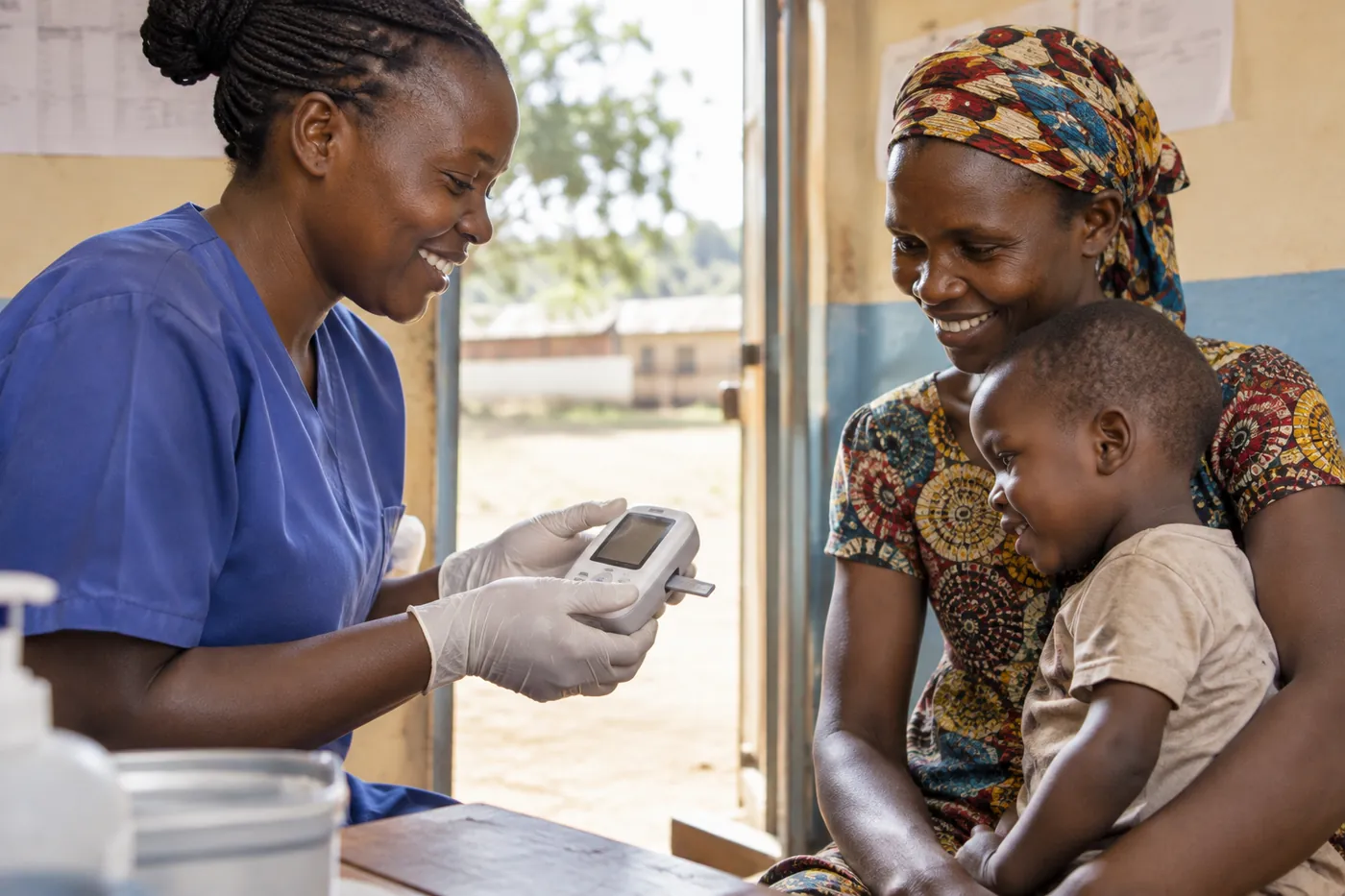
When a child has a fever in a rural clinic, the cause could be malaria, a bacterial or viral infection, tuberculosis, or more than one at once. Without a quick test, treatment is guesswork, and that guesswork drives antibiotic resistance.
The PATHFINDER team, led by Imperial College London with partners in Burkina Faso, Ghana and the Netherlands, has developed a lab-on-chip platform that tells these infections apart by reading the patient's own gene-expression response. The team says no test of this kind has yet been built specifically for the needs of sub-Saharan Africa.
The project will take the platform beyond proof of concept, evaluating it in clinics to find the cause of fever in 1,000 children in Burkina Faso and Ghana. Alongside the trial, it will look at how usable the test is, how it changes care, what regulators need, and how it could be made locally and paid for sustainably.
It will also train a new group of diagnostics researchers in the region.
PATHFINDER · Led by Imperial College London · EU funding €2.8m
Written by Seminal from the project's public summary on CORDIS. Claims the project makes about itself are attributed. Spotted something wrong? Email hello@seminalimpact.com.