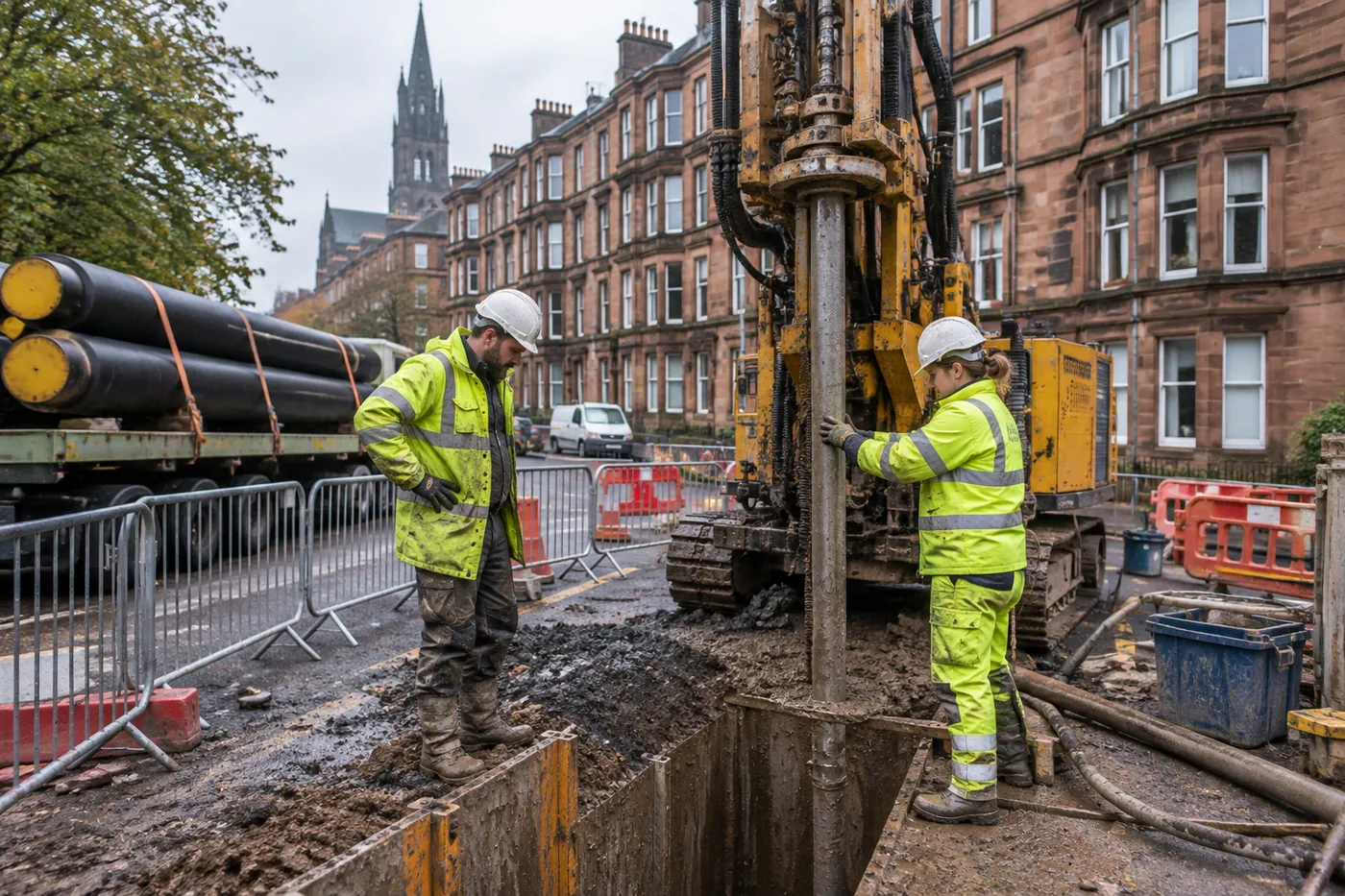
Keeping homes and buildings warm is one of the biggest jobs a city's energy system does. Often there is spare heat around when nobody needs it, and not enough on the coldest days. Storing warmth until it is needed could help cities cut the pollution that comes from heating. But busy cities have little spare room above ground for big storage tanks.
A new project called INTENSE-US wants to put that storage underground instead. It is led by the University of Glasgow, working with several partner organisations. It has €9.0 million from the European Union and runs from January 2027 to June 2030. According to the project, it will show for the first time in Europe how underground heat stores can work at the scale of a whole city, linked to several sources of heat at once.
That is not simple. The ground beneath a city is already crowded. Cities also trap heat, which makes them warmer than the countryside around them. The team plans to use both newly built underground structures and existing ones given a new job. These will run inside real, working energy networks, rather than at separate test sites. The aim is to hold heat for long periods, even from one season to the next, and to ease the strain at busy times when demand is highest.
The team says the technology has so far been tested on a smaller scale. The project aims to move it to a full demonstration in real city conditions. It also hopes to help heat and electricity systems work together more flexibly. If it succeeds, the researchers say, underground heat storage could become a central part of how cities move away from polluting heating.
INTENSE-US · Led by University Of Glasgow · EU funding €9.0m
Written by Seminal from the project's public summary on CORDIS. Claims the project makes about itself are attributed. Spotted something wrong? Email hello@seminalimpact.com.