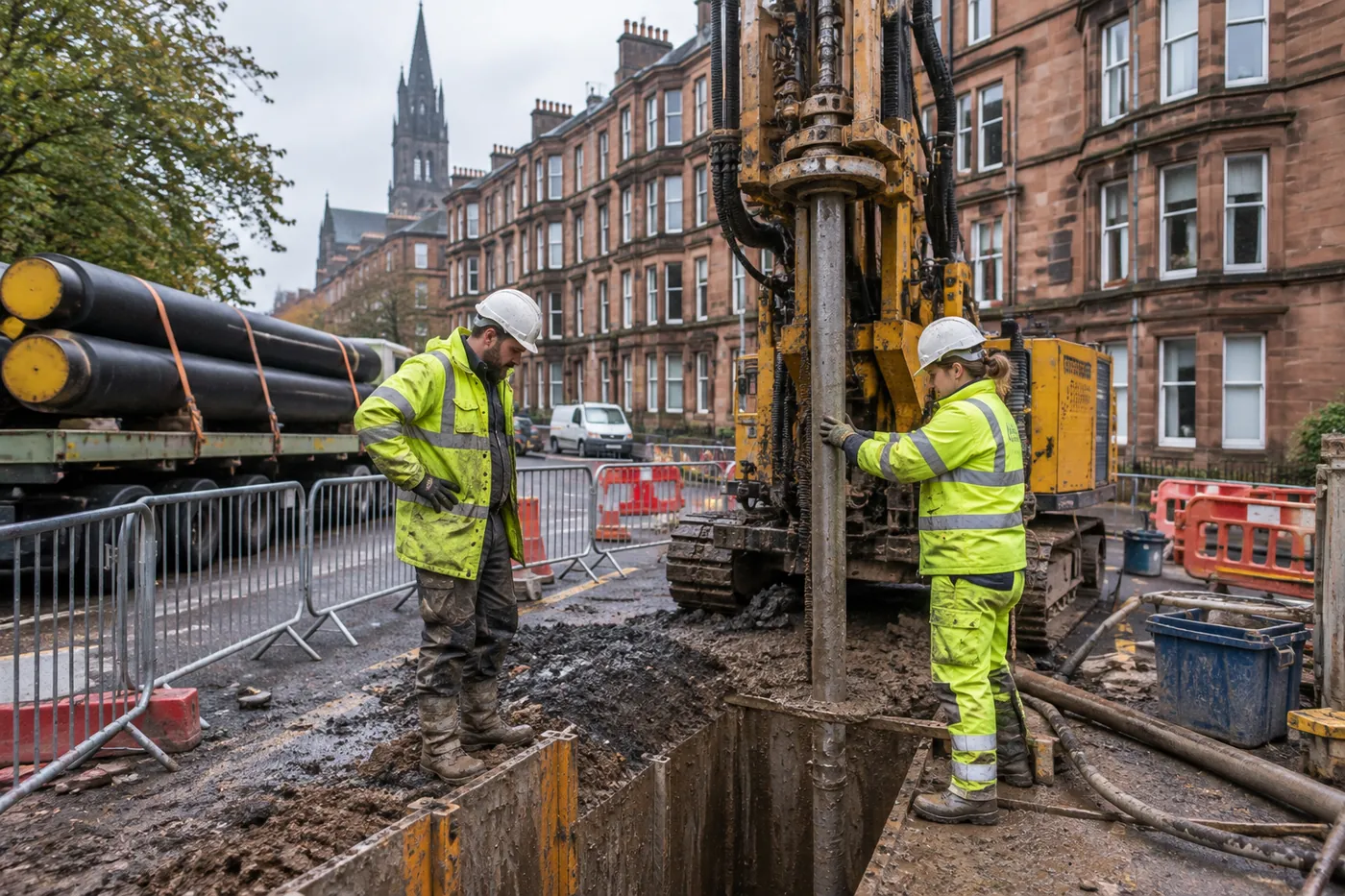
Cities waste heat in summer and burn fuel for it in winter. Storing it underground could bridge the seasons, but in a crowded city there is little room on the surface for big storage tanks.
INTENSE-US, coordinated by the University of Glasgow with 18 partners in five countries, will demonstrate underground thermal energy storage working inside live urban energy systems. The team says this will be the first time in Europe that such storage is coordinated with several heat sources, new and repurposed underground infrastructure, and real district heating and cooling networks.
That infrastructure could include metro tunnels, old mine workings and the foundations of buildings themselves, all of which have to coexist with transport, groundwater and drinking-water protection zones. The project will test storage across three temperature bands, from about 10 °C to above 70 °C.
The aim is to take the technology from the lab-and-pilot stage to a city-scale demonstration, so that cities can treat heat storage underground as ordinary, investable infrastructure: a way to shift heat between seasons and cut peak demand on electricity and heat networks.
INTENSE-US · Led by University of Glasgow · EU funding €9.0m
Written by Seminal from the project's public summary on CORDIS. Claims the project makes about itself are attributed. Spotted something wrong? Email hello@seminalimpact.com.